"Art begins not where an object appears, but where a pause occurs."
Read Practice Statement
Positioning Statement
The Architecture of Absence: An Ethics of Refusal
EDUARD SURZHYK POSITIONING STATEMENT
The Architecture of Absence: An Ethics of Refusal
The Research
My practice is research-based conceptual work focused on the conditions that shape how we act, wait, and understand. I work through three lines: Ethical Refusal (Luke), Temporal Captivity (Telephone Call), and Linguistic Loss. Each begins with a physical mechanism rather than an image. In Luke, darkness is not an effect; it is produced by other bodies blocking the only source of light. In Telephone Call, interference and disconnection become an architectural corridor of waiting. In Linguistic Loss, I treat translation as a filter that rewrites tone and intention - often by replacing silence with words.
The Strategy
I follow a strict Closed Studio protocol. Materials are not publicly indexed or distributed online. This is a methodological choice: it protects the conditions of spectatorship and the integrity of installation-based work. At the core of this protocol is an ethics of parity: the viewer is not a resource to be instructed, impressed, or shamed into reverence. Access must preserve the viewer’s right to refuse and to leave without guilt.
The Institutional Proposal
The projects currently exist in a pre-exhibition phase as developed conceptual models supported by physical and textual archives. They are available for contextual curatorial review by appointment. Additional documentation (project sheets, methodology materials, technical requirements where applicable) can be provided upon request.
Manifesto of the Closed Studio
In an era of total visibility and digital noise, I choose the strategy of the Closed Studio.
My works exist physically, but they are withheld from digital consumption. Social media is not a showcase; it is an archive of the questions from which these works emerged.
I investigate three states of human experience that cannot be photographed:
1. Ethical Refusal (Project Luke)
2. Temporal Captivity (Project Telephone Call)
3. Linguistic Blindness (Project Linguistic Loss)
This document is a map of my research. The territories themselves will only be revealed within the physical space of the institution.
Ethics of Parity
Read (120–160 words)
Ethics of Parity is my operational criterion: a work should not turn the viewer into a resource,
nor turn refusal into guilt. I treat the viewer as an equal subject of interpretation: they may not understand,
may decline, may leave — and that is a valid outcome. If a person exits with shame, with the feeling of being
“not smart enough” or “out of the loop,” the work has shifted from dialogue to hidden domination—through framing,
codes, language, or social pressure.
In my projects I apply a Test for Exit: does the viewer have a real possibility to say “No”
without loss? This is why I practice Ethical Refusal: I would rather limit the work than transfer
physical or psychological risk to someone who entered the situation voluntarily. For me, the true power of art is
inviting power, not suppressing power.
I. LUKE
Investigating the Ethics of Refusal
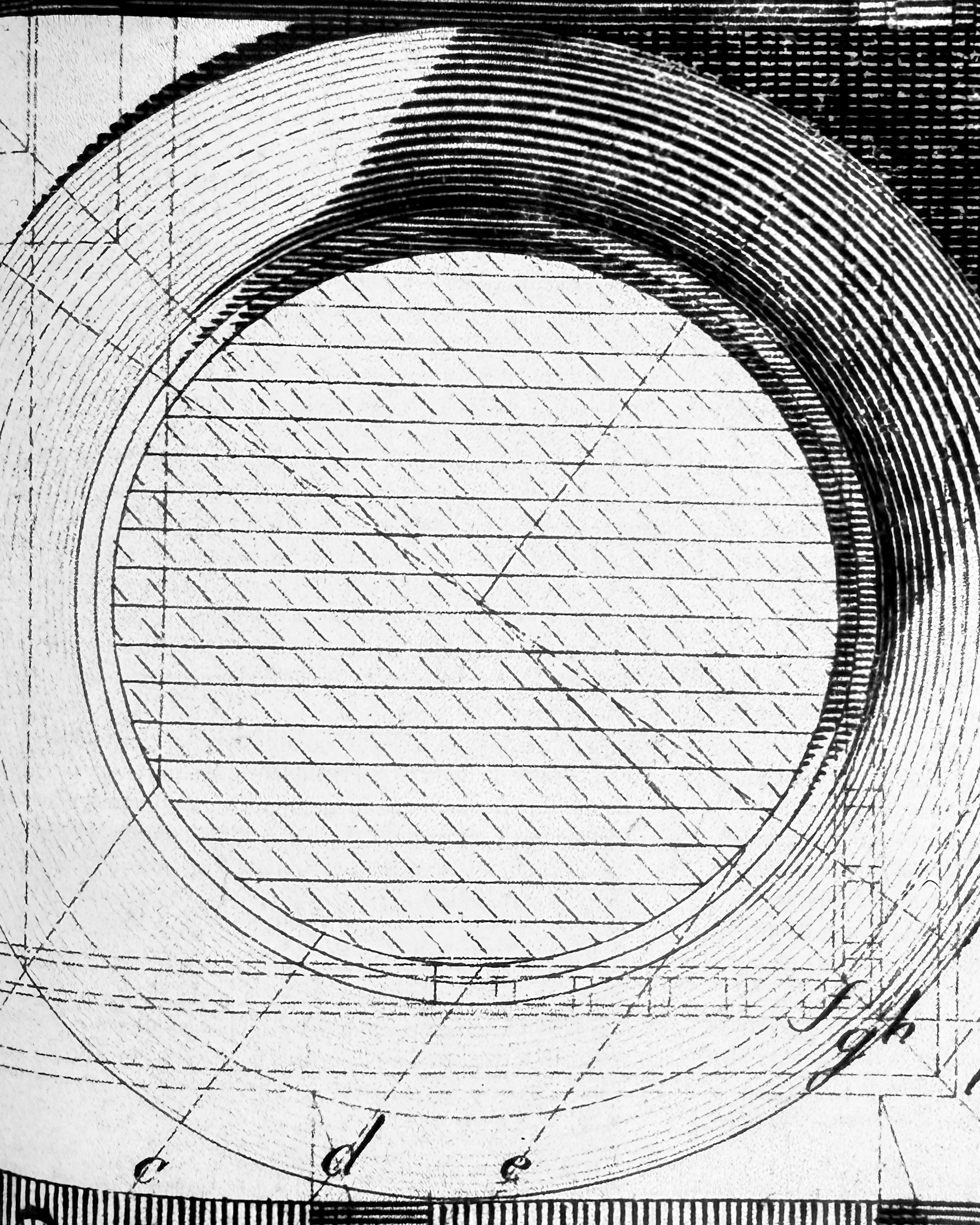
Fig 1. Technical section of the isolation chamber.
The Thesis: Can an unfinished artwork, which did not happen and perhaps never will, still be considered complete?
The Concept: The installation proposes an entrance into a space of absolute darkness through a technical hatch. Inside, there is no navigation. The darkness is formed not by the absence of light, but by the bodies of other participants blocking the sole source. Fear here is not a special effect, but a consequence of social incoordination.
Current Status: The project is completed through Refusal. I stopped exactly where most artists would proceed. I do not have the right to delegate existential risk to the viewer.
Luke is a monument to a choice that is better not made.
"Art about the moment when it is 'possible' — but ‘forbidden’."
II. TELEPHONE CALL
The Anthropology of Waiting
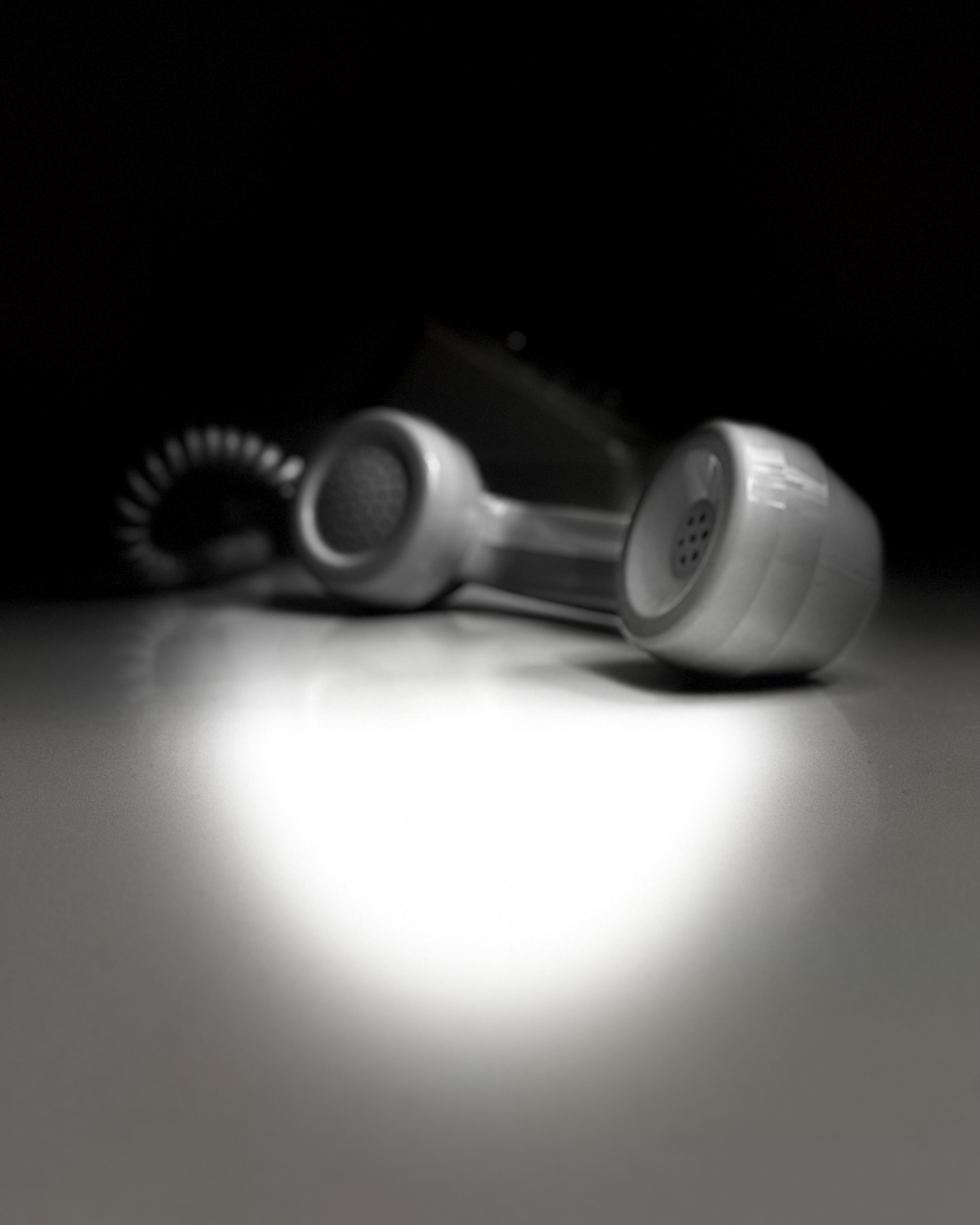
Fig 2. Texture of connection.
The Thesis: Waiting for a call is not a pause in life. It is a form of architectural captivity.
The Concept: We have transitioned from "connection bound to place" (landline) to "connection bound to the body" (mobile). Yet, waiting has not disappeared — it has merely lost its coordinates.
The project captures the state of "Double Waiting": a moment of historical rupture where the old logic of connection has died, but the new transparency has not yet been achieved. It visualizes the impulse, the interference, and the silence.
"We no longer wait for a call in a specific place. We have become the place of waiting ourselves."
III. LINGUISTIC LOSS IN CINEMA
Translation as a Filter
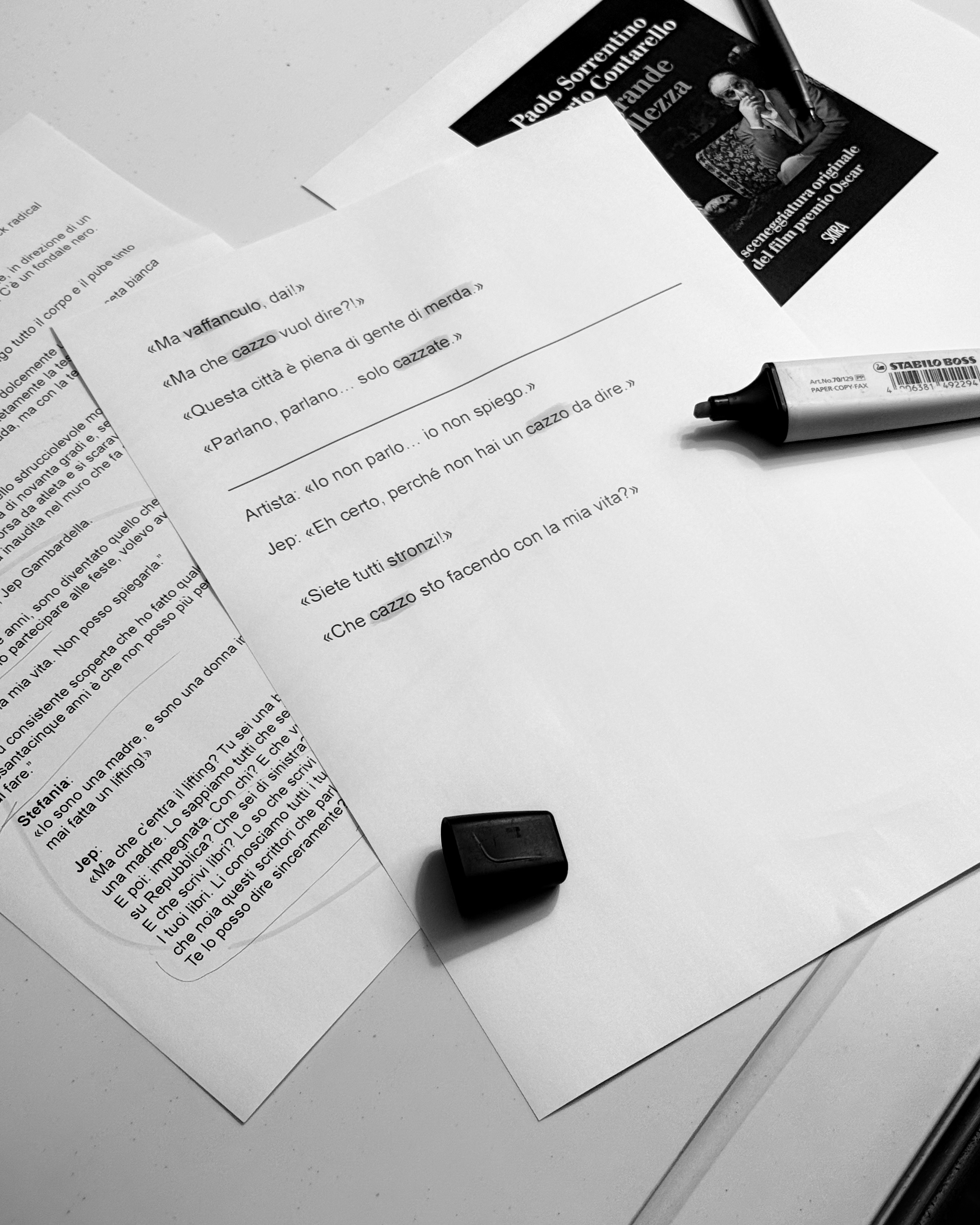
Fig 3. Forensic analysis of the script.
The Provocation: Why will you never be able to see the films of Paolo Sorrentino? (Even if you have watched them).
The Concept: Cinema is a translation of an author's thought. But the moment a film crosses a linguistic border, it ceases to be an original. The translator, the dubbing actor, and the subtitle editor become invisible co-authors who rewrite the meaning.
The project is a digital exhumation of the film The Great Beauty. We expose layers where irony is replaced by pathos, and silence is filled with unnecessary words for the sake of lip-sync.
The Conclusion: Translation is not a bridge. It is a filter. You have seen the plot, but have you heard the author's voice?
Closed Studio Policy
Read policy (for curators)
My practice operates as a Closed Studio: I do not publish images of my works or maintain a public
“portfolio feed” on social platforms. This is not secrecy and not scarcity. It is an ethical and methodological
decision about how power is distributed between artist and viewer.
A public feed demands instant reaction and turns work into consumable content; it easily replaces an encounter
with a social game (“you get it / you don’t,” “included / excluded”). I refuse that format and instead present the
intellectual framework: research questions, method, archive, texts, installation logic, viewing conditions, and
risk assessment.
What I provide for review instead of images:
— one-page project sheets (question / method / viewer experience / requirements / status)
— a research dossier (context, sources, key concepts, ethical protocol)
— installation plans, element checklists, technical requirements
— short talks, essays, and process notes
— upon request: a controlled, private review of visual materials (by appointment)
Closed Studio is not opacity; it is a shift from visual “proof” to articulated conditions and responsibility.